

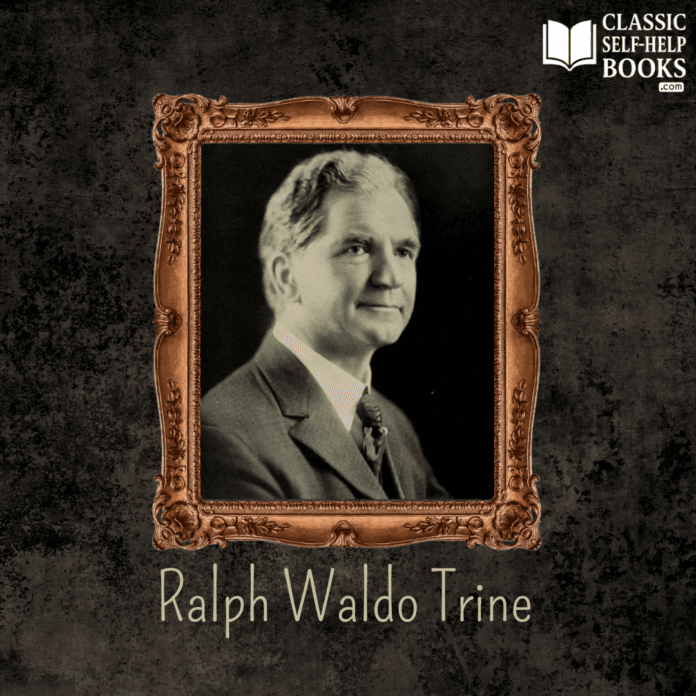
Ralph Waldo Trine: Life, Teachings, and Lasting Influence on New Thought and Self-Help.
Ralph Waldo Trine was a leading New Thought author whose writings on spiritual law, inner power, and positive thinking profoundly influenced modern self-help and personal development philosophy.
Introduction
Ralph Waldo Trine stands as one of the most influential and widely read figures of the American New Thought Movement. Through his eloquent, accessible prose and deeply spiritual worldview, Trine helped translate metaphysical principles into practical guidance for everyday life. His works bridged spirituality, psychology, and ethics, shaping the foundations of modern self-help literature and inspiring generations of readers seeking inner peace, purposeful living, and spiritual empowerment.
Unlike more technical metaphysical writers, Trine’s appeal lay in his ability to communicate profound truths in a compassionate, uplifting, and universal language. His teachings emphasized harmony with spiritual law, the power of constructive thought, and the innate divinity within every individual.
Early Life and Intellectual Formation
Ralph Waldo Trine was born in 1866 in Mount Morris, Illinois, during a period of rapid cultural and spiritual transformation in the United States. The late 19th century saw increasing interest in metaphysics, transcendentalism, and alternative spiritual movements, all of which influenced Trine’s intellectual development.
He was educated at Knox College and later at Harvard University, where he was exposed to philosophical idealism, Emersonian transcendentalism, and emerging psychological thought. These influences deeply shaped his worldview, particularly the idea that spiritual truth could be understood through reason, intuition, and lived experience rather than dogma.
Trine’s intellectual background allowed him to synthesize Eastern philosophy, Christian mysticism, and New Thought metaphysics into a coherent and practical philosophy of life.
Entry into the New Thought Movement
Trine became associated with the New Thought Movement during its formative years, when writers and teachers sought to articulate the principles of mental causation, spiritual law, and personal responsibility. While influenced by earlier figures such as Phineas Parkhurst Quimby and Ralph Waldo Emerson, Trine developed a distinctly gentle and humanistic expression of New Thought philosophy.
His breakthrough came with the publication of In Tune with the Infinite in 1897, a work that achieved extraordinary popularity and established him as a leading voice within the movement. The book resonated deeply with readers seeking spiritual reassurance and practical guidance amid the pressures of modern life.
Core Philosophical Teachings
At the heart of Trine’s philosophy is the conviction that human beings are expressions of an infinite spiritual intelligence and that harmony with this intelligence brings health, prosperity, and fulfillment.
The Power of Thought and Consciousness
Trine taught that thought is creative and that sustained mental attitudes shape character, circumstances, and destiny. He emphasized self-mastery, emotional balance, and conscious alignment with higher ideals rather than forceful affirmation or mental struggle.
Spiritual Law and Universal Harmony
Unlike more mechanistic interpretations of spiritual law, Trine framed universal principles as benevolent and nurturing. He believed that aligning one’s life with love, integrity, and service naturally brings outward success and inner peace.
Ethics, Compassion, and Service
A defining feature of Trine’s work is its ethical foundation. He consistently linked spiritual growth with kindness, moral responsibility, and service to others, rejecting purely materialistic or ego-driven interpretations of success.
Influence on Modern Self-Help and Personal Development
Ralph Waldo Trine’s influence on the self-help genre is profound and enduring. His emphasis on inner harmony, positive thinking, and spiritual alignment prefigured many of the ideas later popularized by success philosophers, motivational speakers, and contemporary wellness movements.
Trine’s work influenced:
- Early 20th-century success literature
- Mindfulness and holistic wellness philosophies
- Modern interpretations of the Law of Attraction
- Ethical leadership and purpose-driven living
His writing style—calm, reflective, and reassuring—helped establish the tone of much modern personal development literature.
Relationship to Other New Thought Authors
Trine occupied a unique position within New Thought. While contemporaries such as Wallace D. Wattles and Charles F. Haanel focused heavily on prosperity and mental discipline, Trine emphasized balance, compassion, and spiritual maturity.
He shared philosophical ground with James Allen in his emphasis on character and ethical living, while differing from Thomas Troward’s more formal metaphysical logic. Together, these authors formed a rich and diverse intellectual ecosystem that shaped the movement’s evolution.
Later Life and Legacy
Ralph Waldo Trine continued writing and lecturing well into the early 20th century. His later works expanded on themes of peace, service, and spiritual simplicity, reflecting a deepening philosophical maturity.
He passed away in 1958, leaving behind a body of work that remains widely read and cited. Today, Trine is recognized not only as a New Thought pioneer but as a foundational figure in the broader history of self-help, spiritual psychology, and conscious living.
His writings continue to resonate with readers seeking a balanced, ethical, and spiritually grounded approach to personal growth.
10 Famous Quotes by Ralph Waldo Trine
- “We receive only that which we give.”
- “Thought is the master weaver, both of the inner garment of character and the outer garment of circumstance.”
- “The outer conditions of a person’s life will always be found to reflect their inner beliefs.”
- “Harmony in the mind brings harmony in life.”
- “No life can be rich that lacks gentleness.”
- “The infinite is not far off; it is within.”
- “Character is destiny.”
- “Peace comes from within; it cannot be given by another.”
- “Live in the present, for it is the only time that is truly yours.”
- “True success is measured by the quality of one’s inner life.”
5 Principal Books by Ralph Waldo Trine
- In Tune with the Infinite (1897)
- The Greatest Thing Ever Known (1903)
- This Mystical Life of Ours (1914)
- Character-Building Thought Power (1915)
- On the Open Road (1908)
Enduring Relevance in the New Thought Tradition
Ralph Waldo Trine’s legacy endures because his teachings address timeless human concerns: inner peace, moral clarity, and meaningful living. His integration of spiritual law with compassion and ethical responsibility offers a holistic vision of success that remains deeply relevant in an increasingly complex world.
Within the New Thought tradition and beyond, Trine’s voice continues to guide readers toward a life lived in harmony with higher principles, inner truth, and universal good.